Executive Summary: The Intimate Frontier of Personal Computing
Computing has undergone a relentless, multi-generational trajectory of miniaturization and physical proximity:
- In the 1960s, a computer was a room-sized mainframe shared by an entire university.
- In the 1980s, the PC sat atop an office desk.
- In the 2000s, the laptop sat on your lap.
- In the 2010s, the smartphone entered your pocket, rarely more than three feet from your body.
Wearable Technology represents the logical, intimate culmination of this progression: computing that fuses directly onto the human body. What began a decade ago as rudimentary digital pedometers counting daily foot steps has evolved into sophisticated clinical telemetry laboratories, context-aware spatial audio nodes, and subtle augmented reality interfaces.
Over the coming decade, wearables will cease to be passive companion accessories tethered to smartphones. Powered by breakthroughs in flexible bio-compatible electronics, optical spectroscopy, energy harvesting, and micro-scale neural interfaces, wearable technology will fundamentally redefine human healthcare, digital identity, and sensory perception.
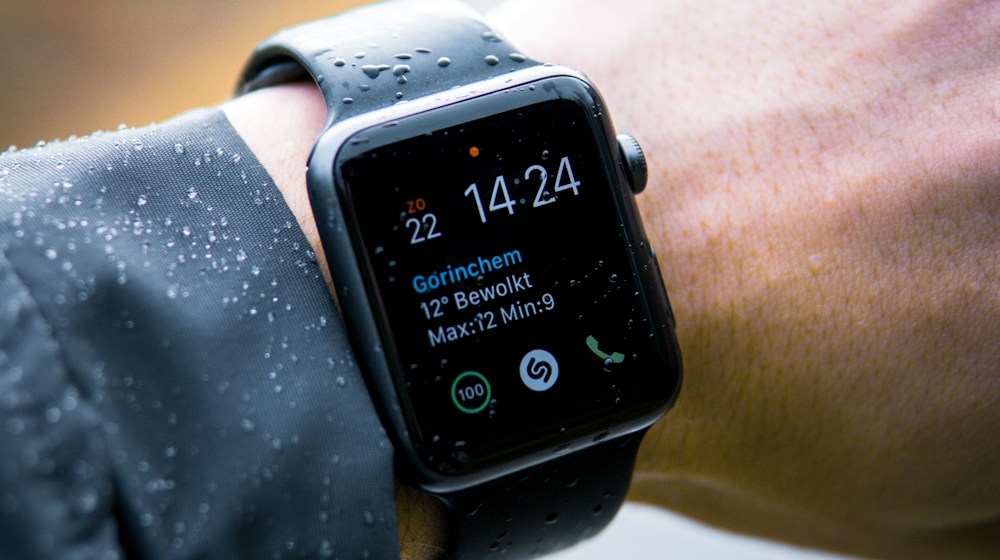 Figure 1: Micro-sensor miniaturization: Photoplethysmography (PPG) and skin temperature sensors packed into titanium ring form factors.
1. The Holy Grail of Biometrics: Continuous Non-Invasive Diagnostics
Today’s consumer smartwatches and smart rings (Apple Watch, Oura Ring, Whoop, Samsung Galaxy Ring) utilize Photoplethysmography (PPG): flashing green and infrared LEDs through subcutaneous skin tissue to measure volumetric blood pulse variations, heart rate variability (HRV), and blood oxygen saturation ($SpO_2$).
Over the next decade, wearable biosensing is crossing into transformative clinical domains:
1. Non-Invasive Blood Glucose Monitoring
For over 500 million diabetic and pre-diabetic individuals worldwide, tracking blood sugar requires painful daily finger-prick blood draws or invasive needle-filament continuous glucose monitors (CGMs).
- Major consumer tech giants and medical startups are in a fierce race to perfect Optical Absorption Spectroscopy: shining specialized short-wave infrared (SWIR) laser wavelengths through the interstitial fluid of the skin and analyzing the unique refractive spectral absorption signature of glucose molecules.
- Achieving clinical-grade accuracy across diverse skin pigments, hydration levels, and motion artifacts without drawing a single drop of blood will transform metabolic health and prevent chronic disease on a planetary scale.
2. Continuous Blood Pressure Tracking (Without Inflatable Cuffs)
Hypertension is known as the “silent killer” because it produces zero symptoms until a stroke or heart attack occurs. Next-generation wearables employ Pulse Transit Time (PTT) algorithms: measuring the exact microsecond delay between the electrical contraction of the heart (ECG) at the chest and the arrival of the mechanical pressure pulse wave at the wrist or finger (PPG), calculating arterial stiffness and continuous systolic/diastolic blood pressure in real time.
 Figure 2: Waveguide optical combiners: Projecting holographic microLED displays directly onto the human retina.
2. Form Factor Evolution: From Wristwatches to Smart Rings, Hearables, and Textiles
Wearables are rapidly expanding beyond the wrist into diverse anatomical form factors:
Smart Rings (Discrete Sleep & Recovery Telemetry)
The wrist is a challenging location for nocturnal biosensing: watches are bulky, battery-hungry, and often removed for sleep. Smart rings crafted from aerospace titanium pack micro-circuitry, infrared temperature sensors, and multi-day batteries into a form factor weighing under 4 grams. The finger’s digital arteries provide significantly higher pulse signal-to-noise ratios than the back of the wrist, making rings the premier standard for sleep staging, circadian rhythm tracking, and menstrual cycle prediction.
Hearables: The Ear as the Ideal Physiological Portal
The ear canal represents one of the richest, most stable anatomical environments for biosensing:
- Protected from external environmental light and physical motion artifacts.
- Proximity to the carotid artery allows clinical-grade core body temperature monitoring, ECG tracking, and continuous EEG brainwave sleep analysis.
- Integrating spatial audio transducers with directional beamforming microphones allows hearables to act as real-time augmented hearing prosthetics: isolating the voice of the person sitting across from you in a noisy restaurant while dynamically filtering out background acoustic chatter.
Smart Eyewear and Waveguide Optics
Bulky VR headsets are evolving into lightweight, stylish everyday smart glasses (such as Meta Ray-Ban and emerging microLED frames):
- Diffractive Optical Waveguides: Directing photons from sub-millimeter microLED projectors through microscopic gratings etched into prescription glass lenses, projecting heads-up notifications, turn-by-turn navigation arrows, and real-time multilingual subtitles directly onto the wearer’s retina.
- Multimodal AI Integration: Micro-cameras and outward-facing microphones paired with on-device vision models allow the glasses to “see what you see,” acting as an ambient AI assistant that can answer questions about the book you are holding or identify a species of bird in your field of view.
3. Human-Machine Interfaces: Electromyography and Neural BCI
 Figure 3: Next-generation clinical telemetry: Raman and optical absorption spectroscopy for continuous non-invasive blood analysis.
How will humans control computing devices when screens vanish? Touching a tiny glass watch screen is clumsy; speaking out loud to a voice assistant in public violates privacy.
The definitive answer is Surface Electromyography (sEMG):
- When your brain decides to move your fingers, electrical motor neuron impulses travel down the arm across the wrist.
- A neural sensor band on the wrist detects these microvolt electrical potentials on the skin surface before your fingers even physically move.
- By applying deep learning classifiers to these neural electrical patterns, a user can control digital interfaces through subtle, invisible micro-gestures: a tiny pinch of the thumb and index finger to select an item, or an imperceptible twitch of the wrist to dismiss an alert, with zero camera tracking required.
4. The Engineering Hurdles: Battery Density and Thermal Limits
Despite breathtaking possibilities, wearable hardware engineers battle severe physical constraints:
| Engineering Dimension | Physical Constraint | Emerging Technological Solution |
|---|---|---|
| Battery Energy Density | Lithium-ion chemistry has reached physical volumetric limits | Solid-State Batteries (SSBs), Silicon-Anode cells, ambient RF energy harvesting |
| Thermal Dissipation | Wearables rest against human skin; surface heat cannot exceed 43°C | Ultra-low power sub-threshold silicon, passive ceramic thermal spreaders |
| Data Privacy & Telemetry | Biometric and audio signals represent deeply intimate health data | On-device NPU processing, local cryptographic vaults, zero cloud upload |
| Sensor Calibration | Variations in skin tone, body fat, and vascular depth distort optical readings | Multi-wavelength adaptive arrays, autonomous machine learning calibration |
Conclusion: The Seamless Symbiosis of Humanity and Technology
Wearable technology is leading us toward an extraordinary paradigm shift: the disappearance of the computer as an external object. When health diagnostics occur invisibly in the background, when spatial intelligence augments our natural vision, and when imperceptible micro-gestures replace keyboards, computing ceases to be an alien tool we manipulate. It becomes a seamless, natural extension of human physiology and cognitive capability.
Biometric Sensor Breakthroughs: Continuous Biomarkers and Preventive Medicine
The next generation of wearable consumer technology is transitioning from recreational fitness tracking into clinical-grade preventive health monitoring. While contemporary smartwatches track heart rate and blood oxygen, emerging laboratory breakthroughs are integrating non-invasive photonic and electrochemical sensors directly into consumer wristbands and smart rings.
Non-Invasive Glucose and Blood Pressure Monitoring
The holy grail of wearable health tech is continuous, non-invasive glucose monitoring (CGM). Traditional medical CGMs require subcutaneous needles replaced weekly. Hardware manufacturers are investing heavily in optical Raman spectroscopy and short-wave infrared (SWIR) sensors capable of measuring blood glucose levels through the skin without drawing blood.
Similarly, optical pulse transit time (PTT) algorithms allow smartwatches to calculate systolic and diastolic blood pressure continuously throughout the day without an inflatable arm cuff, alerting users to early asymptomatic hypertension before vascular complications arise.
+--------------------------------------------------------------+
|            The Evolution of Consumer Wearable Sensing        |
+--------------------------------------------------------------+
| Generation 1 (2012) -> Accelerometer Step Counting           |
| Generation 2 (2016) -> Photoplethysmography (PPG) Heart Rate |
| Generation 3 (2020) -> Single-lead ECG & SpO2 Blood Oxygen   |
| Generation 4 (2024) -> Skin Temperature & Sleep Apnea Alerts |
| Generation 5 (2027+) -> Continuous Non-Invasive Glucose, PTT |
+--------------------------------------------------------------+
Smart Fabrics and the Ambient Biometric Ecosystem
Beyond rigid wrist accessories, biometric sensors are being woven directly into athletic apparel, compression socks, and bedding. Conductive nanofiber threads measure electromyography (EMG) signals from leg muscles during sprinting, detecting biomechanical fatigue and preventing hamstring tears before injuries manifest. Coupled with on-device machine learning models that analyze gait irregularities, smart clothing will soon provide real-time audio coaching to correct physical form in real time.
Energy Harvesting and Battery-Free Wearable Horizons
The primary usability barrier facing consumer wearables remains the tedious necessity of daily battery recharging. To overcome this limitation, research laboratories are developing kinetic, thermoelectric, and photovoltaic energy harvesting micro-generators integrated into device chassis.
By converting subtle temperature differentials between human skin and ambient air (Seebeck effect), or harvesting micro-watts of electrical current from wrist movements during walking, ultra-low-power health sensors and smart rings can operate indefinitely without external charging cords, paving the way for truly continuous, lifetime health telemetry.
Sustainable Materials and Circular Wearable Design
As consumer wearables become ubiquitous accessories, hardware manufacturers are turning to biodegradable biopolymers, recycled aerospace-grade aluminum, and ocean-bound plastics for casing enclosures, ensuring that next-generation biometric trackers minimize their environmental footprint throughout their full product lifecycle.


How Smartphones Have Evolved Over the Years
A comprehensive technological history tracing the smartphone evolution from early cellular communicators to multi-camera silicon powerhouses and on-device neural engines.

OLED vs AMOLED vs LCD: Understanding Display Technologies
A comprehensive optical engineering comparison of LCD, OLED, and AMOLED display panels, evaluating backlights, organic semiconductors, contrast ratios, burn-in, and power efficiency.

How Wi-Fi 7 Is Changing Wireless Connectivity
A deep technical investigation into Wi-Fi 7 (IEEE 802.11be), examining 320 MHz channel widths, 4096-QAM, Multi-Link Operation (MLO), deterministic latency, and 46 Gbps theoretical throughput.