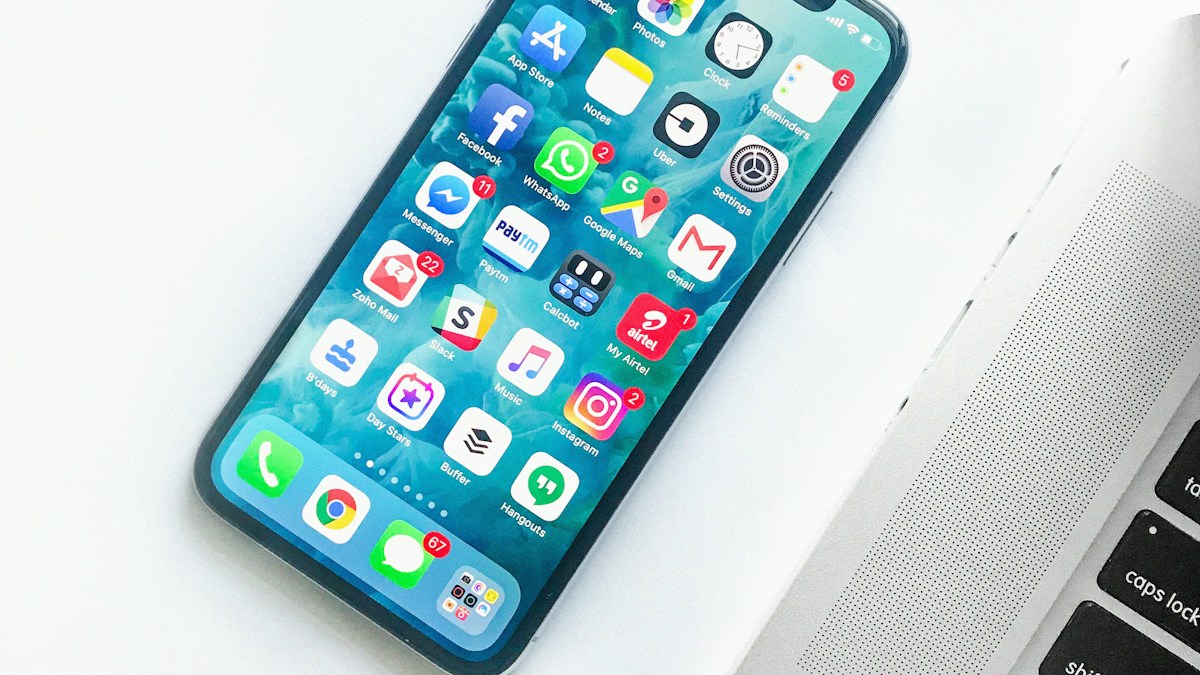
Executive Summary: The Definitive Consumer Device
No technological artifact in human history has proliferated with the velocity or reshaped civilization as thoroughly as the smartphone. In less than three decades, the mobile phone evolved from an expensive, battery-draining luxury capable only of transmitting analog voice signals into an indispensable pocket supercomputer.
Today’s flagship smartphone possesses millions of times more computational power, memory bandwidth, and storage capacity than the Apollo Guidance Computer that directed humanity to the moon. It functions simultaneously as an executive communication hub, high-resolution cinema camera, global satellite navigator, biometric security authenticator, and client-side artificial intelligence workstation.
Tracing the technological trajectory of the smartphone illuminates how semiconductor miniaturization, optical engineering, display physics, and wireless telecommunications converged to create the defining technological instrument of modern human existence.
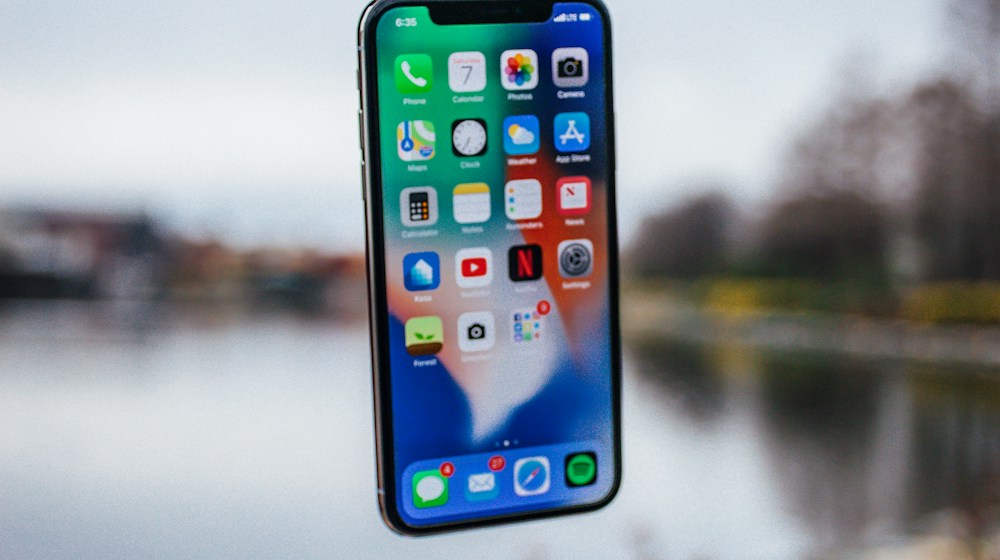 Figure 1: The early cellular era: Physical resistive keyboards and single-core microprocessors.
1. The Pre-Modern Era: From Communicators to Keyboards (1994–2006)
The origin of the smartphone can be traced to 1994 with the release of the IBM Simon Personal Communicator, which integrated a monochrome touchscreen with basic PDA features (calendar, address book, fax receiver). However, battery limitations and nascent cellular networks relegated it to a commercial curiosity.
The Rise of Physical QWERTY and Business Dominance
By the early 2000s, the mobile ecosystem bifurcated into two primary paradigms:
- Symbian & Nokia Communicators: Dominating the consumer landscape with durable form factors, numeric T9 keypads, and rudimentary web browsing over 2G GPRS/EDGE networks.
- BlackBerry (Research In Motion): Conquering the global corporate and governmental enterprise. BlackBerry revolutionized mobile productivity by introducing push email synchronization backed by BlackBerry Enterprise Server (BES) and physical, thumb-optimized QWERTY keyboards that allowed executives to conduct business correspondence on the move.
Yet these early smartphones remained fundamentally segmented: their operating systems were rigid, browsing the real web was agonizingly slow, and interfaces were built around clunky navigational trackballs and styluses.
2. The Multi-Touch Revolution (2007–2012)
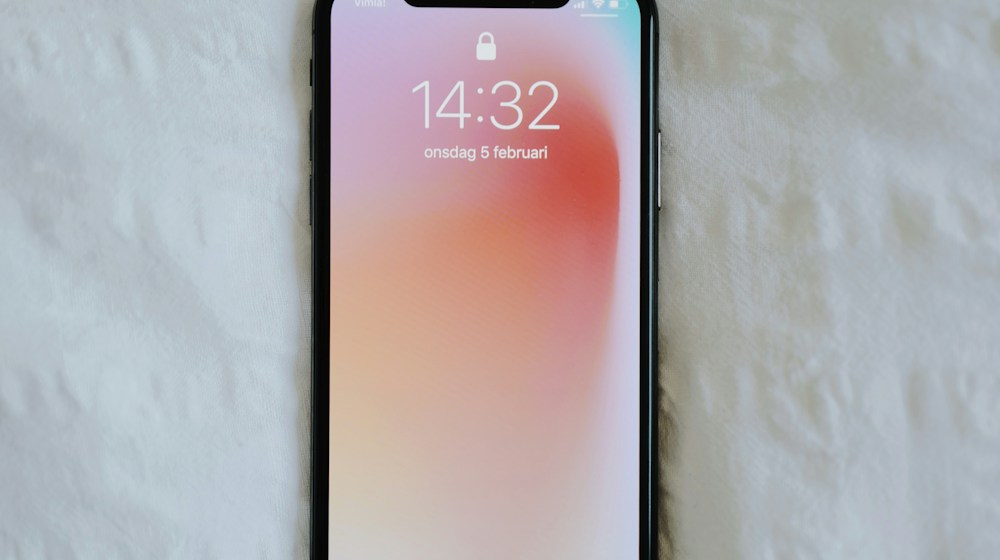 Figure 2: The modern System-on-Chip (SoC): Integrating multi-core CPU, GPU, ISP, and Neural Engine on 3nm nodes.
On January 9, 2007, Steve Jobs unveiled the original iPhone, fundamentally redefining consumer computing overnight. The breakthrough was not merely aesthetic; it was an uncompromising architectural paradigm shift:
- Capacitive Multi-Touch over Resistive Styluses: Discarding resistive touchscreens (which required firm pressure or a plastic stylus) in favor of projected capacitive glass that detected the electrical conductivity of human fingertips, enabling fluid pinch-to-zoom and inertial scrolling gestures.
- Desktop-Class Web Browsing: Moving away from stripped-down WAP (Wireless Application Protocol) mobile portals to deliver full rendering of desktop HTML/CSS web standards.
- The App Store Ecosystem (2008): Transforming smartphones from static carrier-locked appliances into dynamic software distribution platforms. Within years, third-party developers created multi-billion-dollar mobile economies spanning ride-hailing, mobile banking, and mobile gaming.
Concurrently, Google launched the Android Open Source Project (AOSP), partnering with hardware manufacturers (HTC, Samsung, Motorola) to establish a vibrant, competitive, and globally accessible open ecosystem that eventually captured over 70% of the world’s smartphone market share.
3. The Hardware Golden Age: Silicon, Displays, and Cameras (2013–2020)
Over the following decade, smartphones became the primary driver of global semiconductor and materials science innovation:
The System-on-Chip (SoC) Revolution
Smartphone silicon departed from standard desktop CPU architectures by embracing the System-on-Chip (SoC) paradigm. Utilizing ARM RISC architecture fabricated on leading-edge semiconductor nodes (7nm, 5nm, and now 3nm), a single silicon die integrates:
- Heterogeneous CPU clusters (high-performance cores paired with high-efficiency cores).
- Multi-core graphics processing units (GPUs) supporting hardware ray tracing.
- Dedicated Image Signal Processors (ISPs) processing billions of pixels per second.
- Dedicated Neural Processing Units (NPUs) accelerating on-device machine learning inference.
Display Evolution: From TFT to OLED
Thick, low-contrast TFT-LCD panels were systematically superseded by Organic Light Emitting Diode (OLED) and AMOLED technologies:
- Self-emissive pixels that turn completely off to deliver infinite contrast ratios and true blacks.
- High refresh rate panels (120Hz LTPO ProMotion) dynamically modulating refresh rates between 1Hz and 120Hz to balance silky-smooth fluid animations with battery longevity.
The Rise of Computational Photography
Physical constraints prevent smartphones from housing massive optical zoom lenses and large photographic glass sensors. Optical engineers resolved this through Computational Photography:
- Multi-camera arrays combining primary wide-angle sensors, ultra-wide lenses, and folded periscope optical zoom optics.
- Multi-frame image stacking: capturing dozens of underexposed and overexposed frames within milliseconds of pressing the shutter, utilizing deep learning algorithms to synthesize HDR imagery with stunning dynamic range, low-light night mode fidelity, and artificial depth-of-field portrait bokeh.
4. Modern Frontiers: Foldables and Edge AI (2021–Present)
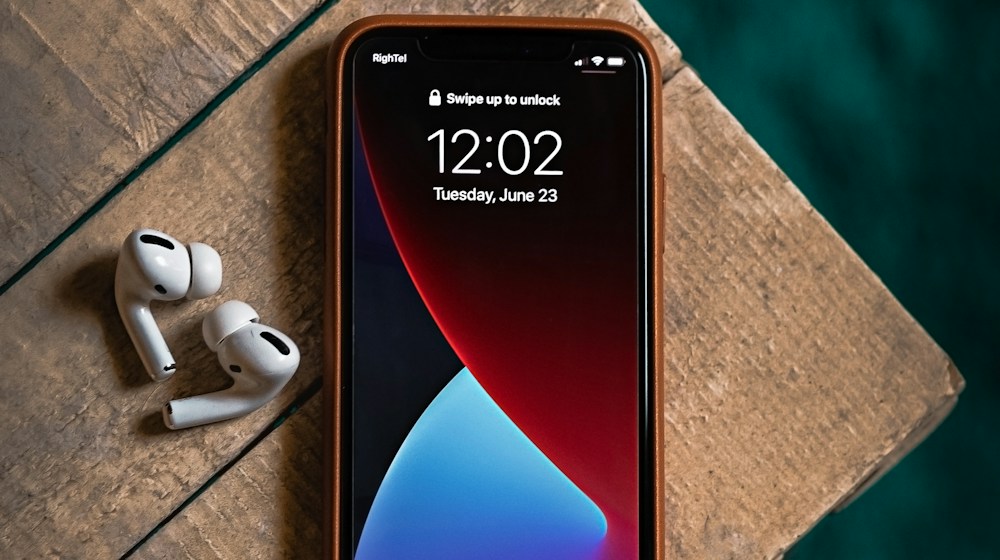 Figure 3: Frontier form factors: Ultra-thin flexible OLED substrates and micro-gear titanium hinge mechanics.
Today, smartphone innovation is pushing across two cutting-edge technological frontiers:
1. Foldable and Flexible Form Factors
After a decade of homogeneous glass-and-aluminum rectangular slabs, foldable hardware represents a radical mechanical transformation:
- Ultra-Thin Glass (UTG): Chemically strengthened flexible glass substrates that withstand hundreds of thousands of fold cycles.
- Complex Titanium & Carbon Hinge Mechanics: Multi-axis gear assemblies that close completely flat with minimal screen crease visibility, allowing a standard pocket smartphone to unfold into a 7.6-inch tablet productivity canvas.
2. On-Device Generative AI and NPUs
The latest flagship smartphones (Apple Intelligence, Google Pixel Gemini Nano, Qualcomm Snapdragon 8 Elite) run foundation language and diffusion models directly on local NPU silicon:
- Real-time multilingual voice translation during live phone calls with zero cloud latency.
- Local computational photo manipulation (removing distracting background objects, generative expand).
- Contextual personal assistants capable of cross-referencing on-device calendar entries, emails, and WhatsApp conversations with total client-side privacy.
The Smartphone Evolution Timeline
+-------------------------------------------------------------------------+
|                  SMARTPHONE TECHNOLOGICAL EPOCHS                        |
+-------------------------------------------------------------------------+
| 1994–2006: The Business Communicator Era                                |
|   - Form factors: Clamshells, sliders, physical QWERTY keyboards       |
|   - Networks: 2G / 3G GPRS; text email, monochromatic screens           |
|                                                                         |
| 2007–2012: The Multi-Touch & App Ecosystem Revolution                   |
|   - Capacitive glass, pinch-to-zoom, iOS and Android platforms          |
|   - App Store monetization, mobile web standards, 3G/4G LTE             |
|                                                                         |
| 2013–2020: The Silicon & Computational Photography Epoch                |
|   - 64-bit ARM SoCs, 120Hz OLED displays, multi-lens camera systems     |
|   - Neural engines, facial biometric scanning, 5G NR gigabit data      |
|                                                                         |
| 2021–Present: The Foldable & Edge Generative AI Era                     |
|   - Flexible UTG displays, satellite SOS telemetry, 3nm silicon nodes   |
|   - Local LLMs running entirely on-device with zero cloud latency       |
+-------------------------------------------------------------------------+
Conclusion: The Next Evolutionary Horizon
The smartphone has matured into a ubiquitous, peak-utility consumer technology. While incremental year-over-year gains in CPU clock speeds and camera megapixels have plateaued, the device’s role is once again transforming: from a passive content consumer to an autonomous cognitive portal. As on-device neural processing units grow increasingly capable and spatial computing ecosystems emerge, the smartphone will remain the central computational anchor orchestrating our connected smartwatches, smart glasses, automobiles, and digital lives for decades to come.
Computational Photography: How Silicon Replaced Optical Glass
Perhaps no aspect of smartphone evolution is more striking than the complete disruption of consumer digital cameras. A decade ago, professional photographers insisted that small smartphone sensor lenses could never match the shallow depth of field, dynamic range, and low-light clarity of large DSLR cameras with heavy glass elements.
The Algorithmic Camera Stack
Smartphone silicon architects solved the physical limitations of small camera sensors not with bigger lenses, but with computational photography:
- Multi-Frame Zero Shutter Lag Buffering: When a user opens their smartphone camera app, the image sensor continuously captures high-resolution frames into a circular RAM buffer. Tapping the shutter button does not take a photo; it selects the sharpest frames captured seconds earlier and averages them.
- Computational HDR & Exposure Fusion: Smartphones merge underexposed frames (retaining highlight details in cloudy skies) with overexposed frames (pulling detail out of deep shadows) using semantic segmentation to light skin tones and landscapes independently.
- Machine Learning Denoising and Night Modes: Dedicated image signal processors (ISPs) analyze dozens of low-light exposures, using neural networks trained on millions of images to reconstruct fine textures without introducing muddy sensor noise.
+--------------------------------------------------------------+
|            The Computational Photography Pipeline            |
+--------------------------------------------------------------+
| Continuous Sensor Stream (12-Frame Circular RAM Buffer)      |
|                             |                                |
|                             v                                |
| Optical Image Stabilization + Gyroscope Motion Alignment     |
|                             |                                |
|                             v                                |
| Semantic Segmentation (Separates Hair, Sky, Skin, Foliage)   |
|                             |                                |
|                             v                                |
| Neural Image Fusion (HDR Synthesis + Low-Noise Tone Mapping) |
|                             |                                |
|                             v                                |
| Instant 24MP/48MP Output Delivered in Real-Time to Viewfinder|
+--------------------------------------------------------------+
By substituting raw physics with algorithmic intelligence, smartphones turned pocket devices into the most capable, versatile cameras ever created.
Circular Economy and the Right to Repair Revolution
As smartphone innovation plateaus and consumers hold devices for four to six years, the mobile industry is pivoting toward sustainability and modular repairability. Regulatory mandates—such as the European Union’s eco-design directives—are compelling manufacturers to design smartphones with easily removable batteries, standardized screws, and guaranteed seven-year operating system security updates. This ensures consumer electronics transition away from planned obsolescence toward long-term digital longevity and reduced electronic waste.


OLED vs AMOLED vs LCD: Understanding Display Technologies
A comprehensive optical engineering comparison of LCD, OLED, and AMOLED display panels, evaluating backlights, organic semiconductors, contrast ratios, burn-in, and power efficiency.
How Wi-Fi 7 Is Changing Wireless Connectivity
A deep technical investigation into Wi-Fi 7 (IEEE 802.11be), examining 320 MHz channel widths, 4096-QAM, Multi-Link Operation (MLO), deterministic latency, and 46 Gbps theoretical throughput.
Understanding Processor Technology: CPU vs GPU
An architectural deep dive into semiconductor processor technology, contrasting CPU low-latency sequential computing with GPU massively parallel matrix execution.