
Executive Summary: The Physics of Visual Presentation
From the smartphones in our pockets and the smartwatches on our wrists to high-end laptops, gaming monitors, and 85-inch living room televisions, human interaction with digital information is mediated almost entirely through display panels.
Yet behind the smooth glass surfaces of our consumer electronics lies a complex battleground of materials science, optical physics, and semiconductor engineering. When consumers browse product specification sheets, they are confronted with a bewildering alphabet soup of panel acronyms: LCD, IPS, OLED, AMOLED, Super AMOLED, and QD-OLED.
Understanding the physical mechanisms distinguishing Liquid Crystal Displays (LCD) from Organic Light Emitting Diodes (OLED and AMOLED) is critical for evaluating image fidelity, battery longevity, outdoor sunlight readability, and long-term hardware durability.
 Figure 1: Traditional LCD architecture: Multi-layer sandwich with continuous LED edge backlighting.
1. Liquid Crystal Display (LCD): The Backlit Workhorse
For over three decades, the Liquid Crystal Display (LCD) has served as the dominant visual display technology across the global electronics industry.
How LCD Works: The Multi-Layer Shutter System
An LCD is not a light source; it is an optical light valve. It operates as a multi-layered sandwich:
- The Backlight Unit (BLU): A continuous sheet of white Light Emitting Diodes (LEDs) positioned behind the display panel, constantly emitting a uniform flood of light across the entire screen area.
- Polarizing Filters: Two polarizing glass plates with perpendicular transmission axes. Light passing through the first filter cannot pass through the second unless its polarization angle is rotated.
- Liquid Crystal Layer: Microscopic molecules suspended in liquid between the polarizers. When an electrical voltage is applied to transparent indium tin oxide (ITO) electrodes, the liquid crystals untwist, altering the polarization angle of the light and controlling how much light escapes through the front polarizer.
- Color Filter Matrix: Each pixel is subdivided into three sub-pixels (Red, Green, and Blue). White light filtered through the liquid crystals passes through these color filters to compose the final image.
Variants: TN vs. VA vs. IPS
- Twisted Nematic (TN): Oldest, lowest cost, fastest response times, but notoriously poor color accuracy and terrible viewing angles.
- In-Plane Switching (IPS): Aligns liquid crystals parallel to the glass substrate. Offers superb color reproduction and wide 178-degree viewing angles, making it the industry standard for professional graphic design monitors.
The Inherent Flaw of LCD: Gray “Blacks” and Light Bleed
Because the backlight in an LCD is always illuminated, even when a pixel displays pure black, the liquid crystal shutters cannot completely block 100% of the light. Some photons inevitably leak through. Consequently, blacks on an LCD appear as dark charcoal gray, contrast ratios are limited (typically 1,000:1 to 3,000:1), and high-contrast scenes suffer from noticeable edge light bleed.
2. Organic Light Emitting Diode (OLED): Self-Emissive Precision
 Figure 2: Self-emissive OLED sub-pixel matrix: Red, Green, and Blue organic diodes emitting independent photons.
OLED represents a fundamental departure in optical engineering. Unlike LCDs, OLED displays completely eliminate the separate backlight unit. OLED is a self-emissive display technology: every single individual sub-pixel produces its own independent light and color.
The Physics of Electroluminescence
An OLED pixel consists of microscopic carbon-based organic semiconductor thin-film layers situated between two electrodes (a cathode and an anode):
- When an electrical current is applied, electrons from the cathode and holes from the anode recombine within the organic emissive layer.
- This recombination releases energy in the form of light (photons), a phenomenon known as electroluminescence.
- By altering the chemical composition of the organic compounds, sub-pixels emit pure red, green, or blue wavelengths natively.
The Superpower of OLED: Infinite Contrast
Because every pixel is an independent light emitter:
- To display pure black, the display controller simply cuts the electrical current to that specific pixel.
- The pixel turns completely off, emitting zero photons.
- This yields true, absolute, inky blacks and a mathematically infinite contrast ratio ($\infty:1$). High Dynamic Range (HDR) content pops with stunning visual depth that no standard LCD can replicate.
3. AMOLED and Super AMOLED: Active Matrix Acceleration
 Figure 3: LTPO AMOLED panel achieving infinite contrast ratios and dynamic variable refresh rates.
What is the difference between OLED and AMOLED? The acronym stands for Active Matrix Organic Light Emitting Diode.
Passive Matrix (PMOLED) vs. Active Matrix (AMOLED)
- PMOLED (Passive Matrix): Controls pixels through crossing grid lines of row and column electrodes. Suitable only for tiny, low-resolution displays (such as a monochrome fitness band or microwave clock). It is power-inefficient and cannot scale to high resolutions.
- AMOLED (Active Matrix): Integrates a Thin-Film Transistor (TFT) backplane beneath the OLED layer. Every individual sub-pixel is paired with its own storage capacitor and driving transistor. The capacitor maintains the pixel’s electrical charge until the next refresh cycle, enabling high refresh rates (90Hz, 120Hz, 165Hz) and ultra-high resolutions (4K, 500+ pixels per inch) with superior energy efficiency.
Proprietary Iterations: Super AMOLED and Dynamic AMOLED
- Super AMOLED (Samsung): Integrates the capacitive touch digitizer layer directly into the display glass itself rather than laminating a separate touch glass on top. This eliminates air gaps, slashes panel thickness by 20%, and drastically reduces outdoor sunlight reflections.
- LTPO AMOLED (Low-Temperature Polycrystalline Oxide): The pinnacle of modern mobile display engineering. By combining LTPS TFTs with oxide semiconductor transistors, LTPO panels can dynamically and continuously throttle refresh rates between 1Hz (for static reading or Always-On Displays, saving massive battery power) up to 120Hz (during gaming or scrolling).
Comprehensive Optical Comparison Matrix
| Technical Specification | IPS LCD | Standard OLED | Dynamic LTPO AMOLED |
|---|---|---|---|
| Light Source | Continuous external LED Backlight | Self-emissive organic pixels | Self-emissive with active TFT backplane |
| Black Levels | Dark Gray (Light leakage occurs) | True Absolute Black (0.000 nits) | True Absolute Black (0.000 nits) |
| Contrast Ratio | 1,000:1 to 3,000:1 | Infinite ($\infty:1$) | Infinite ($\infty:1$) |
| Viewing Angles | Moderate to Wide (IPS) | Perfect (Zero color wash-out) | Perfect with minimal off-axis tint |
| Power Consumption | Constant, regardless of content displayed | Variable; dependent on screen luminance | Extremely efficient; 1Hz static throttle |
| Response Time | 1ms to 5ms (Liquid crystals must rotate) | 0.03ms to 0.1ms (Instantaneous) | Under 0.1ms |
| Burn-in Vulnerability | Zero risk of permanent burn-in | Potential risk with static elements | Mitigated via pixel-shifting firmware |
| Production Cost | Low / Mature manufacturing scale | Moderate to High | High / Premium flagship tier |
Critical Challenges: The Reality of Burn-In and Degradation
While OLED and AMOLED are visually superior to LCDs in almost every metric, organic semiconductors possess one fundamental physical vulnerability: Differential Material Aging (Burn-In).
- Because the pixels are made of organic chemical compounds, they degrade gradually over thousands of hours of operation as electrical current excites their bonds.
- Blue Diode Fragility: Blue organic emitters possess higher bandgap energy requirements, causing blue sub-pixels to degrade significantly faster than red and green sub-pixels.
- Permanent Image Retention: If a static high-contrast visual element (such as a smartphone navigation bar, battery percentage icon, or news channel ticker) is displayed continuously at maximum brightness for months, those specific pixels age faster than the surrounding area, leaving a faint, permanent ghost image burned into the screen.
Modern Engineering Mitigations
Modern smartphone manufacturers have effectively neutralized burn-in through defensive firmware:
- Pixel Shifting: Silently shifting status bar icons and clocks by a few sub-pixels every few minutes so the identical diodes are not continuously stressed.
- Thermal Heatsinks: Laminating vapor chambers and graphite heat spreaders directly behind the OLED panel to dissipate heat, which is the primary catalyst for organic diode degradation.
Conclusion: The Verdict on Modern Display Technology
In modern consumer electronics, AMOLED and OLED have firmly won the flagship mobile and television battle. The visual advantages of self-emissive organic pixels—infinite contrast, true inky blacks, instantaneous response times, paper-thin form factors, and flexible substrate folding—render LCDs obsolete for premium smartphones and entertainment displays.
However, LCD remains an indispensable workhorse. In budget smartphones, durable rugged enterprise tablets, and desktop workstations where static spreadsheets and coding editors remain on screen for 10 hours a day, the cost efficiency, high sustained peak brightness, and complete immunity to burn-in ensure that liquid crystal technology will remain commercially relevant for years to come.
Pulse-Width Modulation (PWM) and Eye Strain Considerations
When choosing between OLED and LCD displays, sensitive users must consider screen dimming mechanics. Unlike LCD panels that dim their continuous LED backlights by lowering voltage (DC dimming), most OLED and AMOLED screens control perceived brightness through high-speed Pulse-Width Modulation (PWM)—rapidly flickering pixels on and off hundreds of times per second.
At low brightness levels, low-frequency PWM flickering can cause sub-conscious eye fatigue, migraines, and stroboscopic strain in sensitive individuals. Modern premium flagship displays increasingly adopt ultra-high PWM frequencies (above 2,160Hz or 3,840Hz) or incorporate hardware-level DC dimming modes to maintain deep organic blacks while safeguarding ocular comfort during late-night reading sessions.

How Smartphones Have Evolved Over the Years
A comprehensive technological history tracing the smartphone evolution from early cellular communicators to multi-camera silicon powerhouses and on-device neural engines.
How Wi-Fi 7 Is Changing Wireless Connectivity
A deep technical investigation into Wi-Fi 7 (IEEE 802.11be), examining 320 MHz channel widths, 4096-QAM, Multi-Link Operation (MLO), deterministic latency, and 46 Gbps theoretical throughput.
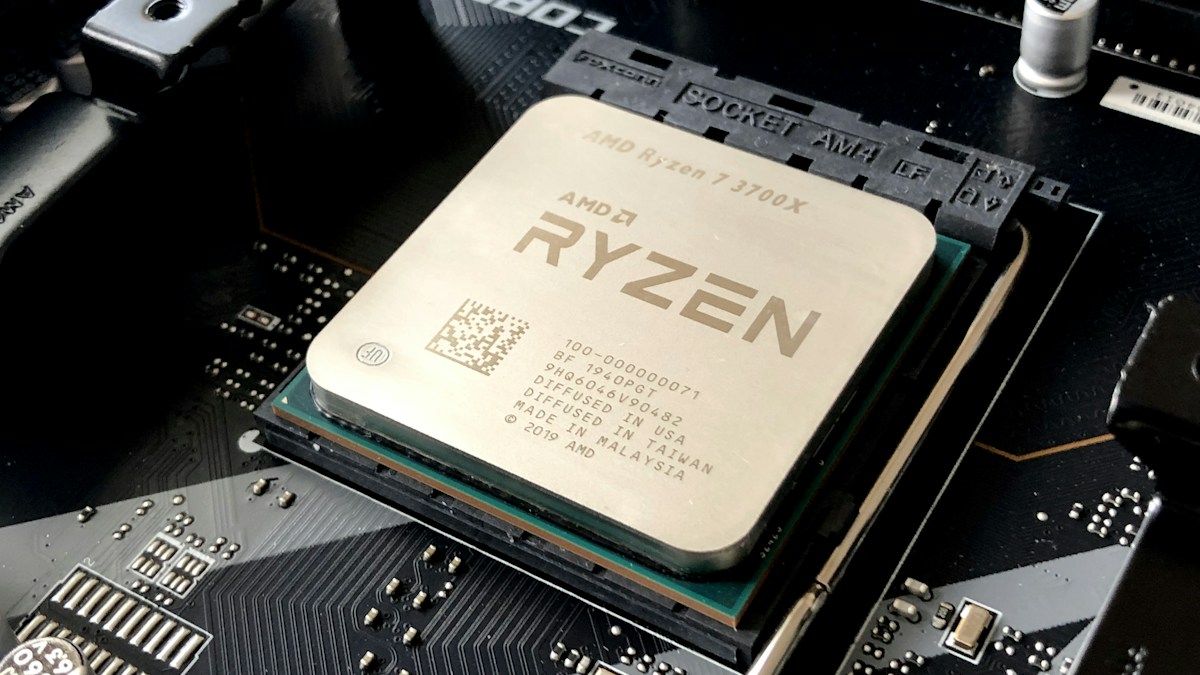
Understanding Processor Technology: CPU vs GPU
An architectural deep dive into semiconductor processor technology, contrasting CPU low-latency sequential computing with GPU massively parallel matrix execution.