
Executive Summary: The Universal Connective Tissue of Modern Software
In the contemporary computing ecosystem, no single software application exists in isolation. When you hail an Uber, the mobile app does not calculate global map geography from scratch; it communicates with the Google Maps platform. When you purchase an airline ticket on Expedia, the website does not maintain private airline seating databases; it queries the live reservation systems of Delta, British Airways, and Lufthansa simultaneously. When you pay for goods on an e-commerce storefront, the store never touches your raw credit card number; it communicates securely with Stripe or PayPal.
All of this seamless digital interoperability is made possible by Application Programming Interfaces (APIs). An API is the formalized contract and communication protocol that allows distinct, independently authored software programs to exchange data and invoke functionality reliably, predictably, and securely.
 Figure 1: The Client-Server API Request-Response Lifecycle: Headers, JSON payload, and HTTP verbs.
The Restaurant Metaphor: An Intuitive Understanding
The classic and most accurate analogy for an API is a restaurant:
- The Customer (Client / Frontend): You sit at a table looking at a menu. You know what you want to consume, but you have no physical access to the kitchen, no knowledge of how the ovens operate, and no permission to rummage through the walk-in refrigerator.
- The Kitchen (Server / Database / Backend): The back-of-house system that houses the ingredients, executes recipes, and prepares the meals.
- The Waiter (The API): The messenger who bridges the gap. The waiter takes your specific order from the menu, delivers it in a standardized format to the kitchen staff, and returns with your prepared meal.
In software architecture:
- The Client (mobile app, browser) sends an API Request.
- The API validates the request format and user permissions.
- The Backend Server processes the logic, queries the database, and returns an API Response (typically formatted as JSON).
Anatomy of an HTTP API Request and Response
Modern web APIs communicate predominantly over the Hypertext Transfer Protocol (HTTP/HTTPS). A standard API exchange consists of four structured components:
1. HTTP Verbs (The Action)
HTTP verbs define the intended CRUD (Create, Read, Update, Delete) operation:
GET: Retrieve a resource without modifying server state (e.g.,GET /api/v1/users/42).POST: Create a new resource or submit data for processing (e.g.,POST /api/v1/payments).PUT/PATCH: Update an existing resource completely (PUT) or partially (PATCH).DELETE: Remove a resource from the database.
2. Endpoints (URIs)
The structured address indicating which resource is being targeted. RESTful conventions mandate noun-based, hierarchical naming:
- Good:
GET /api/v1/orders/912/items - Bad:
GET /api/v1/getAllOrderItemsForCustomer
3. Headers
Metadata describing the payload and security context:
Content-Type: application/jsonAuthorization: Bearer eyJhbGciOiJIUzI1NiIs...(JWT Token)Accept-Encoding: gzip, br
4. Body (Payload)
The actual structured data transmitted, universally formatted in JSON (JavaScript Object Notation):
{
  "orderId": 912,
  "currency": "USD",
  "amount": 149.99,
  "items": [
    { "sku": "TECH-MAG-01", "quantity": 1 }
  ]
}
5. HTTP Status Codes: The Universal Language of Results
When an API responds, it includes a three-digit status code communicating the outcome:
- 2xx Success:
200 OK,201 Created(resource created),204 No Content(deleted). - 3xx Redirection:
301 Moved Permanently,304 Not Modified(cached). - 4xx Client Errors:
400 Bad Request(invalid JSON),401 Unauthorized(missing token),403 Forbidden(insufficient privileges),404 Not Found,429 Too Many Requests(rate limited). - 5xx Server Errors:
500 Internal Server Error,502 Bad Gateway,503 Service Unavailable.
The Architectural Battle: REST vs. GraphQL vs. gRPC
 Figure 2: API development and testing: Verifying rate limits, token authentication, and JSON schema validation.
Over the past two decades, API architecture has evolved beyond simple REST:
| Protocol / Standard | Architectural Mechanics | Primary Strengths | Primary Weaknesses |
|---|---|---|---|
| REST (Representational State Transfer) | Resource-oriented HTTP endpoints returning JSON payloads | Simple, universally understood, natively cached by CDNs | Over-fetching and under-fetching data across multiple endpoints |
| GraphQL | Query language; client requests exact nested fields from single endpoint | Zero over-fetching; client dictates response shape | Complex server-side query optimization; difficult CDN caching |
| gRPC (Google Remote Procedure Call) | High-performance RPC over HTTP/2 using binary Protocol Buffers | Ultra-fast binary serialization, bidirectional streaming | Not natively supported in standard web browsers without proxy |
Enterprise API Security: Guarding the Gateway
 Figure 3: Modern API Gateway architecture enforcing rate limiting, OAuth 2.0 authorization, and TLS termination.
Because APIs expose direct programmatic conduits into backend databases, they represent the single largest attack surface for modern enterprise breaches (as cataloged in the OWASP API Security Top 10):
1. The Role of the API Gateway
Production architectures place an API Gateway (Kong, AWS API Gateway, Cloudflare) in front of microservice fleets:
- Rate Limiting & Throttling: Restricting clients to 100 requests per minute using Token Bucket or Leaky Bucket algorithms to prevent brute-force attacks and DDoS degradation.
- TLS Termination & mTLS: Encrypting all public traffic via TLS 1.3 and authenticating inter-service communication via mutual TLS.
- Centralized Authentication: Validating OAuth 2.0 access tokens and OpenID Connect (OIDC) signatures before forwarding requests to internal services.
2. Preventing Broken Object Level Authorization (BOLA / IDOR)
The most widespread vulnerability in APIs is BOLA (Broken Object Level Authorization):
- An attacker logs into their own account (User ID: 101) and issues:
GET /api/v1/invoices/101. - The attacker then changes the URL parameter:
GET /api/v1/invoices/102. - If the backend code queries the database by invoice ID alone without mathematically verifying that Invoice 102 belongs to the authenticated user ID in the JWT token, private customer financial data is breached.
Conclusion: The API-First Economy
We live in an API-First World. Modern enterprises no longer build monolithic software applications where user interfaces and database logic are welded together. Instead, software is engineered as a federation of decoupled, modular services communicating across clean, rigorously documented, and cryptographically secured APIs. By turning software capabilities into reusable digital building blocks, APIs have unlocked an unprecedented era of technological composition, developer velocity, and global software innovation.
REST vs GraphQL vs gRPC: Modern API Architectural Paradigms
As software systems grow more interconnected and distributed, choosing the right API architectural pattern is one of the most critical decisions a software engineering team can make. The standard REST (Representational State Transfer) pattern is now frequently augmented or replaced by GraphQL and gRPC depending on data density and latency requirements.
Architectural Comparison of Leading API Protocols
| Protocol | Transport | Serialization | Best Suited For | Primary Advantage |
|---|---|---|---|---|
| REST | HTTP/1.1 or HTTP/2 | JSON, XML | Public developer APIs, standard CRUD web services | Universal browser support, mature tooling, HTTP caching |
| GraphQL | HTTP POST | JSON | Mobile apps, complex data dashboards | Eliminates over-fetching; client queries exact fields needed |
| gRPC | HTTP/2 | Protocol Buffers (Binary) | Internal microservice-to-microservice communication | Ultra-low latency, binary compactness, bi-directional streaming |
+--------------------------------------------------------------+
|            API Architectural Evolution Paradigm              |
+--------------------------------------------------------------+
| [REST API]      -> Fixed endpoints, returns full JSON models |
|                     Over-fetching / Under-fetching risks     |
|                                                              |
| [GraphQL]       -> Single endpoint, declarative queries      |
|                     Client requests exactly what it displays |
|                                                              |
| [gRPC / Proto]  -> Binary serialization over HTTP/2 streams  |
|                     Type-safe remote procedure calls         |
+--------------------------------------------------------------+
Rate Limiting, API Gateways, and Defensive Engineering
Exposing an API directly to the public internet introduces severe availability and security risks. Modern architectures position an API Gateway (such as Kong, Traefik, or AWS API Gateway) at the ingress boundary to enforce defensive policies:
- Token Bucket & Leaky Bucket Rate Limiting: Throttling traffic per API key or IP address to prevent denial of service attacks and brute-force harvesting.
- JWT Validation & Scopes: Offloading JSON Web Token signature verification from downstream backend services, rejecting unauthorized requests at the perimeter.
- Automated OpenAPI / Swagger Documentation: Generating interactive API explorers directly from code definitions, enabling seamless developer onboarding and contract-driven testing across distributed teams.
API Versioning Strategies and Long-Term Backward Compatibility
Maintaining public APIs requires disciplined versioning policies to prevent breaking downstream third-party integrations:
- URI Path Versioning (
/v1/users,/v2/users): The most transparent and caching-friendly approach, making API version dependencies immediately apparent in client network inspectors. - Header-Based Versioning (
Accept: application/vnd.company.v2+json): Keeps URLs clean while passing schema requirements through HTTP headers. - Deprecation Lifecycles and Sunsetting: Following formal RFC 8594 standards by injecting
SunsetandDeprecationHTTP headers, giving client developers ample warning before legacy endpoints are permanently turned off.
Synthetic Monitoring and Automated Contract Testing
Deploying resilient APIs demands continuous synthetic verification in production environments:
- Consumer-Driven Contract Testing (Pact): Allows downstream client applications to define expected response schemas, ensuring backend teams cannot push breaking changes that violate consumer contracts.
- Global Synthetic Ingestion Checks: Automated synthetic requests executed from twenty geographic cloud regions every sixty seconds, testing realistic multi-step authentication and transactional API workflows to detect degraded endpoints before customers report outages.


Frontend vs Backend Development: Understanding the Difference
A comprehensive architectural comparison between client-side frontend engineering and server-side backend systems, exploring tech stacks, responsibilities, and career paths.
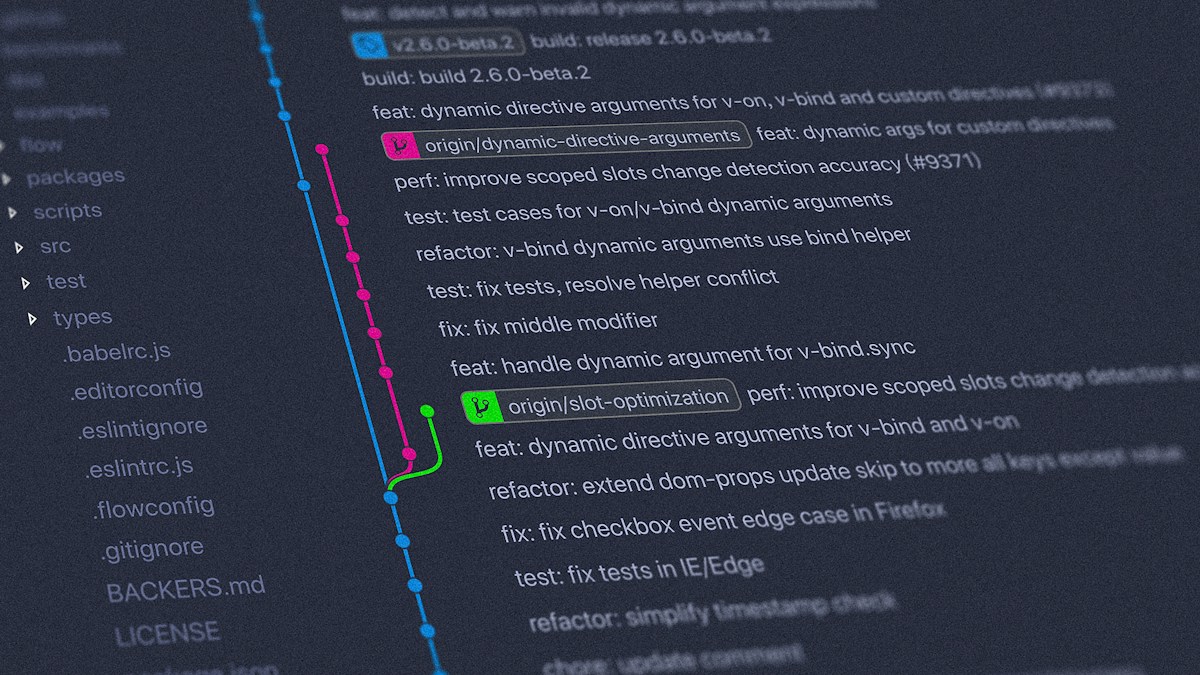
What Is Git and GitHub? A Complete Beginner's Guide
A definitive guide to version control with Git and collaborative development on GitHub, exploring commit DAGs, branching models, pull requests, and merge strategies.

Understanding Web Frameworks and Their Importance
An analytical breakdown of modern web frameworks, evaluating client-side SPAs, server-side rendering, routing paradigms, architectural patterns, and performance economics.