Executive Summary: The Kinetic Embodiment of Artificial Intelligence
For over six decades, industrial robotics was defined by blind, repetitive rigidity. The classical industrial robot—pioneered in 1961 by the Unimate arm on General Motors assembly lines—was essentially an immensely powerful, blind, and dangerous mechanical crane. Bolted permanently to concrete factory floors and isolated behind high steel safety cages, these legacy robots executed pre-programmed geometric coordinate scripts over and over. If a human entered their path, or if a component was misaligned by two millimeters, the robot would crash, shatter parts, or inflict fatal injuries.
Today, robotics is undergoing a monumental, multi-disciplinary revolution: The Emergence of Embodied Intelligence.
By fusing high-speed electric harmonic drive actuators, solid-state LiDAR sensors, stereoscopic computer vision cameras, and deep reinforcement learning foundation models, modern robots have transitioned from blind, rigid machines into autonomous, adaptable, and perceptive physical agents.
From self-navigating Autonomous Mobile Robots (AMRs) in fulfillment warehouses to surgical tele-manipulators and general-purpose bipedal humanoid workers, robotics is fundamentally transforming global manufacturing, logistics, healthcare, and agriculture.
 Figure 1: High-precision articulated industrial robots executing sub-millimeter automotive assembly.
1. The Technological Pillars of Modern Robotic Autonomy
What enables modern robots to perceive, navigate, and manipulate the physical world? Four foundational engineering disciplines converge:
1. Advanced Computer Vision & Spatial Perception
Legacy robots could not “see”; modern robots possess superhuman optical awareness:
- Stereoscopic 3D Depth Cameras: Emitting structured infrared light patterns to map point-cloud surfaces with sub-millimeter precision.
- Solid-State LiDAR (Light Detection and Ranging): Pulsing millions of eye-safe laser beams per second, calculating Time-of-Flight (ToF) reflections to construct 360-degree high-definition 3D volumetric maps of dynamic environments in real time.
- Spatial AI Models: Deep learning vision models that classify objects (e.g., distinguishing between a fragile glass vial, a heavy steel bolt, and an employee’s hand) rather than simply processing raw pixel matrices.
2. Simultaneous Localization and Mapping (SLAM)
How does an autonomous mobile robot navigate an unfamiliar, dynamic warehouse without getting lost?
- Visual SLAM (vSLAM): An algorithmic framework where the robot builds a mathematical map of an unknown environment while simultaneously tracking its own real-time location within that map.
- By continuously matching visual feature landmarks from camera frames against inertial measurement unit (IMU) gyroscopic data, the robot plans optimal routes around obstacles without requiring magnetic floor tape or expensive radio beacons.
3. Compliant Actuation and Force-Torque Sensing
Human muscles are naturally compliant; if your arm bumps into a wall, your tendons yield. Traditional robotic servo motors, by contrast, were completely rigid.
- Modern robots employ Series Elastic Actuators (SEAs) and 6-axis Force-Torque Sensors integrated directly into the joints and grippers.
- The robot measures mechanical resistance thousands of times per second. If it encounters unexpected resistance (such as touching a human arm), it yields instantly, eliminating kinetic injury.
2. Collaborative Robots (Cobots): Dismantling the Safety Cages
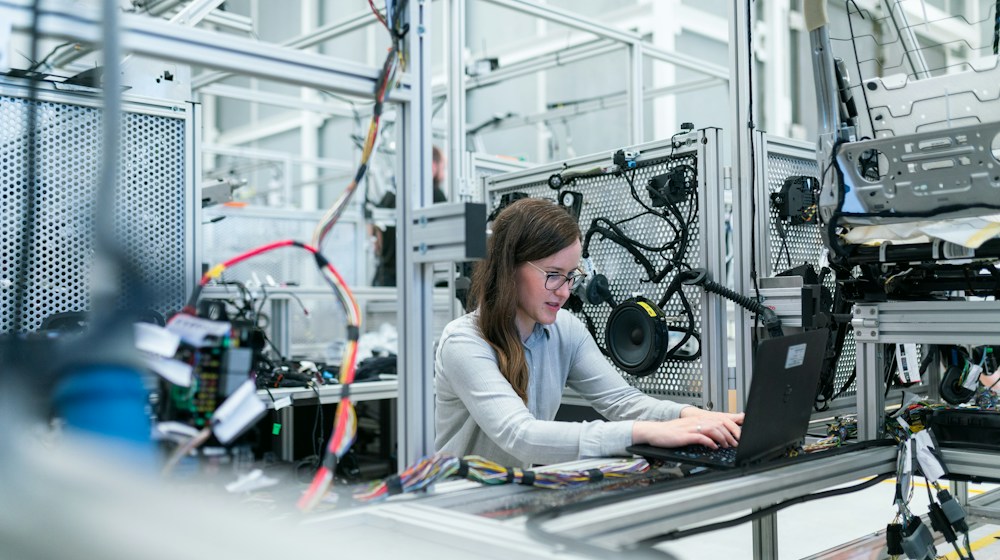 Figure 2: Human-Robot Collaboration (Cobots): Force-limited sensors enabling safe shared workspaces.
The fastest-growing segment in industrial manufacturing is the Collaborative Robot (Cobot) (pioneered by Universal Robots, FANUC, and ABB):
| Operational Dimension | Traditional Industrial Robot | Collaborative Robot (Cobot) |
|---|---|---|
| Workspace Requirement | Isolated inside interlocked steel safety cages | Operates directly alongside humans on open assembly benches |
| Safety Mechanism | Physical perimeter barriers; emergency trip lines | Force-limiting joints, soft padded skin, collision detection |
| Programming Model | Complex low-level robotic code (e.g., KUKA KRL) | “Lead-Through Programming” (Human physically guides arm) |
| Payload & Velocity | Massive (100kg to 1,000kg+); high kinetic speed | Light to Medium (3kg to 25kg); controlled safe speeds |
| Footprint & Deployment | Fixed, permanent concrete foundation bolts | Mobile, lightweight, easily wheeled between workstations |
Cobots excel at augmenting human workers in high-precision, ergonomically hazardous tasks: precision screw driving, electronic circuit board soldering, machine tending, and pharmaceutical liquid pipetting.
3. Industrial Transformation Across Core Verticals
1. Logistics and Supply Chain Fulfillment
E-commerce giants process millions of customer orders daily. Fulfillment centers have transformed into coordinated swarms of Autonomous Mobile Robots (AMRs):
- Instead of human pickers walking 15 miles a day down endless warehouse aisles, shelf-lifting robots glide beneath multi-ton inventory pods, lift them, and transport them directly to stationary human packing stations.
- Advanced robotic arms equipped with soft silicone suction grippers and vision perception execute piece-picking: grasping millions of heterogeneous retail items (from a soft bag of cotton balls to a heavy rectangular electronics box) with zero human intervention.
2. Healthcare and Robotic Minimally Invasive Surgery
In surgical theaters, systems like the da Vinci Surgical System and orthopedic surgical robots translate a surgeon’s hand movements into micro-scale, tremor-free movements of miniature articulated instruments inside the patient’s body:
- Sub-Millimeter Incisions: Reduces surgical incisions from 10 inches down to 8 millimeters, minimizing patient blood loss, slashing infection risks, and cutting post-operative hospital recovery times from weeks to days.
- Autonomous Sub-Tasks: Research systems are beginning to execute autonomous suturing and laser ablation under direct surgeon supervision.
3. Precision Agriculture
Agriculture faces acute global labor shortages and climate unpredictability. Agricultural robotics is revolutionizing the field:
- Autonomous Tractors: Guided by RTK GPS (Real-Time Kinematic) accurate to within 2 centimeters, plowing and harvesting fields around the clock with zero human operators.
- Targeted Micro-Weeding: Agricultural robots scan crop rows using multispectral cameras, identifying individual weeds among lettuce crops and zapping them with high-powered micro-lasers or targeted micro-droplets of herbicide, slashing agricultural chemical use by up to 90%.
4. The Frontier: Humanoid Robotics and Foundation Models
 Figure 3: Next-generation humanoid robotics: Vision-language-action (VLA) models navigating unstructured human environments.
The most ambitious and heavily funded frontier in modern engineering is General-Purpose Humanoid Robotics (Tesla Optimus, Figure AI, Boston Dynamics Atlas, Sanctuary AI):
Why the Humanoid Form Factor?
For decades, critics argued that bipedal humanoids were needlessly complex compared to specialized wheeled boxes. However, the humanoid form factor possesses an overwhelming practical advantage:
- The World Was Built for Humans: Our physical infrastructure—stairs, door handles, vehicle cabs, factory assembly benches, warehouse aisles, and narrow corridors—was engineered over centuries explicitly for a bipedal creature standing 5’8” with two arms and five-fingered hands.
- A general-purpose humanoid robot can step directly into an existing automotive factory, climb a ladder, pick up standard power tools, and begin working immediately without requiring billions of dollars in factory re-tooling.
Vision-Language-Action (VLA) Models
What was missing historically was the “brain.” Today, robotics researchers are marrying deep learning foundation models with physical control, creating Vision-Language-Action (VLA) Models:
- The robot does not need custom programming for every single movement.
- A human can issue a natural voice command: “Figure, unpack the grocery bag and place the apples in the wicker fruit basket.”
- The VLA model translates high-level natural language, identifies the apples via multimodal vision, calculates the 3D spatial grasping trajectory, and directs electrical current to the fingers’ motor actuators in a continuous sensorimotor feedback loop.
Conclusion: The Era of General-Purpose Physical Automation
Robotics is standing at the identical historical inflection point that personal computing occupied in the late 1970s. Just as computers evolved from room-sized industrial mainframes into ubiquitous personal tools that transformed intellectual labor, robotics is transitioning from rigid factory cranes into adaptable, intelligent, and perceptive physical partners. By liberating humanity from dangerous, physically debilitating, and soul-crushing manual drudgery, modern robotics promises to dramatically elevate global productivity, revolutionize healthcare, and usher in an unprecedented era of material abundance.
Collaborative Robots (Cobots), Spatial Intelligence, and Human Safety
Historically, industrial robots were massive hydraulic machines locked inside steel cages with interlock sensors to prevent human injury. If a human entered the operational envelope, the machine executed an emergency stop.
Modern robotics has broken free from physical cages through the development of Collaborative Robots (Cobots) engineered for side-by-side human collaboration:
Force-Torque Sensing and Compliant Actuation
Modern cobots utilize series elastic actuators and integrated torque sensors embedded in every joint. If a mechanical arm makes unexpected physical contact with a human coworker—even with minimal force—the motor drives instantly reverse or decouple within 10 milliseconds, preventing crushing injuries.
+--------------------------------------------------------------+
|            The Collaborative Cobot Safety Hierarchy          |
+--------------------------------------------------------------+
| [Spatial Computer Vision] -> 3D LiDAR/Stereo Depth Cameras   |
|                               Detects Human Proximity (1-3m) |
|                             | Decelerates Arm Speed          |
|                             v                                |
| [Tactile Joint Feedback]  -> High-Res Joint Torque Sensors   |
|                             Instant Decoupling on Contact    |
+--------------------------------------------------------------+
Spatial Foundation Models in Industrial Environments
Robots are no longer limited to repeating hard-coded coordinates programmed by specialized robotics technicians. By integrating spatial foundation models and multi-modal vision-language-action (VLA) AI, industrial arms perceive their physical environments in real time. They can identify randomly oriented components tumbling down conveyor belts, grasp fragile glass vials without shattering them, and navigate around unexpected obstacles on busy factory floors autonomously.
Continuous Fleet Learning and Cloud Robotics
Modern industrial robots do not learn in isolation. Through cloud robotics networks, when a robotic arm in one fulfillment facility encounters an irregular parcel geometry and successfully calculates a novel grasping strategy, that newly acquired manipulation model is uploaded, validated, and distributed across thousands of connected robots worldwide overnight.

Quantum Computing Explained for Beginners
A clear, rigorous guide explaining quantum computing fundamentals: qubits, superposition, quantum entanglement, cryogenics, and the post-quantum cryptography transition.
How Blockchain Technology Actually Works
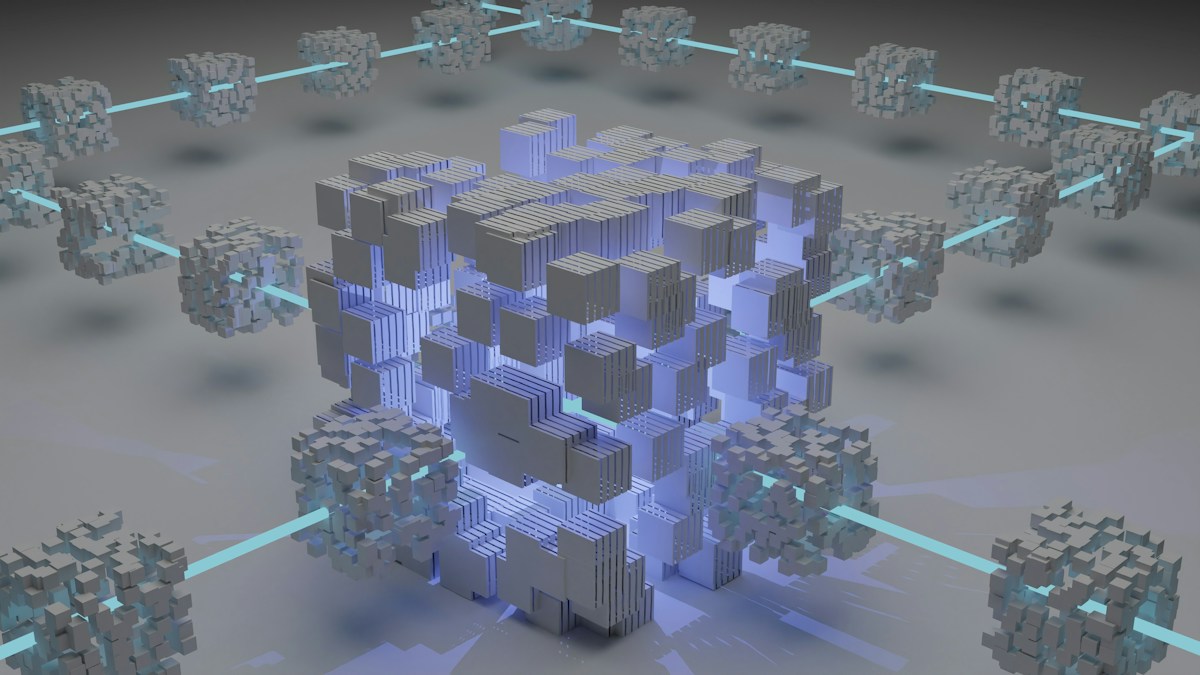
A comprehensive cryptographic breakdown of blockchain distributed ledgers, Byzantine Fault Tolerance, Proof of Work vs Proof of Stake, and smart contract state machines.

Understanding the Internet of Things (IoT)
A comprehensive investigation into IoT architectures, MQTT protocol messaging, sensor edge telemetry, smart industrial grids, and embedded device security.